Chapter 11: God’s Eternal Character
Page 13
Pastor Bill, if you are reading this, “Listen to the word of the Lord!”
If you call yourself a Christian, perk up your ears to the word of God.
This is a very serious discussion and I am giving you God Almighty’s logic to punish sinners. I have provided three translations. I like the New Century Version, but the Moffatt and Amplified translations make the point clear. I could have listed many other translations, but they are all basically the same.
Here is the main point. God does not reward you for doing one or more righteous deeds. He rewards you for being a righteous [good] person all the time. He knows you will make mistakes. That is not an issue with God. However, you cannot rely upon anything good you have done in the
past as justification or offsetting for doing any thing evil today. Let me rephrase that a little. No amount of good you have done in the past will justify any amount of evil [iniquity, sin] you might want to do in the future.
One WAY
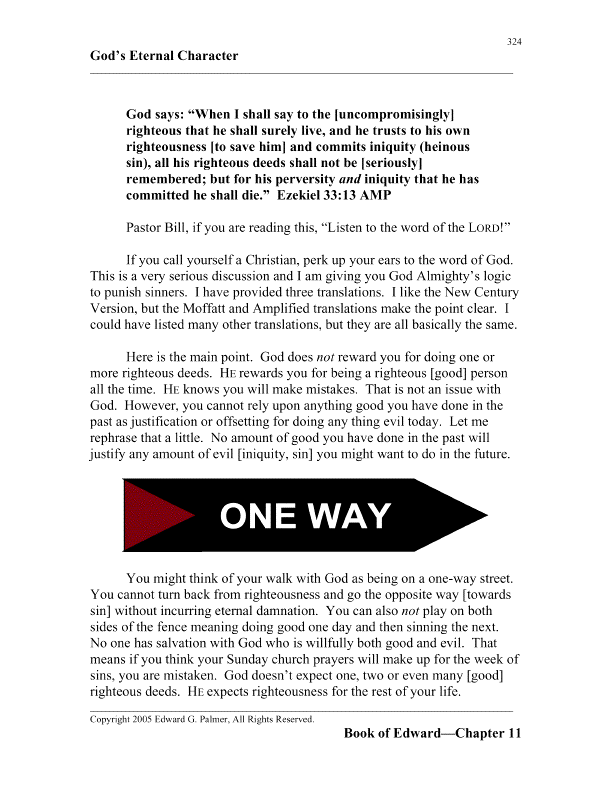
You might think of your walk with God as being on a one-way street. You cannot turn back from righteousness and go the opposite way [towards sin] without incurring eternal damnation. You can also not play on both
sides of the fence meaning doing good one day and then sinning the next. No one has salvation with God who is willfully both good and evil. That means if you think your Sunday church prayers will make up for the week of sins, you are mistaken. God doesn’t expect one, two or even many [good] righteous deeds. He expects righteousness for the rest of your life.
I suspect that about now someone is thinking but “I have Christ Jesus.” If you believe preachers like Charles Stanley, you might be right. But let me ask you this question. Is Charles Stanley’s eternal salvation story a higher level of moral authority than God Almighty? Remember, the verses
cited above are ones in which God Himself is speaking. Charles or God?